Nahaufnahme von verschiedenen Buntstiften in vielen verschiedenen Farben

Colorful vocabulary: Nuances and Shades in French

22 August 2025

Author: Berlitz

Colors are more than just words - they connect people, evoke memories and give us a better understanding of the world. But how do you describe the vibrant red of a poppy field in Provence or the calming blue of the sea in French? This is where our adventure into the world of colors and their meanings begins. In this blog article, we'll explore the basics of French color vocabulary.

Why should you learn the colors in French?

Learning colors in French offers numerous advantages - both for beginners and advanced learners who want to improve their language skills. Here are three reasons why it's worthwhile:

1. Colors as the foundation of language

Colors are among the essential words of a language. They are used in many everyday situations - whether to describe clothing, objects or impressions. Those who master colors can express themselves directly, precisely and comprehensibly.

2. Colors provide insight into culture

Colors have their own symbolism in every culture. In French, for example, there are numerous idioms and expressions associated with colors, such as “voir la vie en rose” (“to see things through rose-colored glasses”) or “être vert de rage” (“to be green with rage”). The phrases are a window into the French mentality and way of thinking.

3. Colors make everyday communication easier

Whether shopping, fashion, cooking or traveling - knowing the colors helps in many practical situations. In France, we encounter colors everywhere: at markets full of fresh fruit or in the elegant boutiques of Paris.

The colors in French

Colors are an integral part of the French language - they bring descriptions to life, shape idioms and reflect cultural details. Whether you want to describe the bright tones of a Parisian market or name elegant color combinations in the fashion world, the vocabulary of colors opens the door to a colorful variety of expressions. Let's first take a look at how to say “color” correctly.

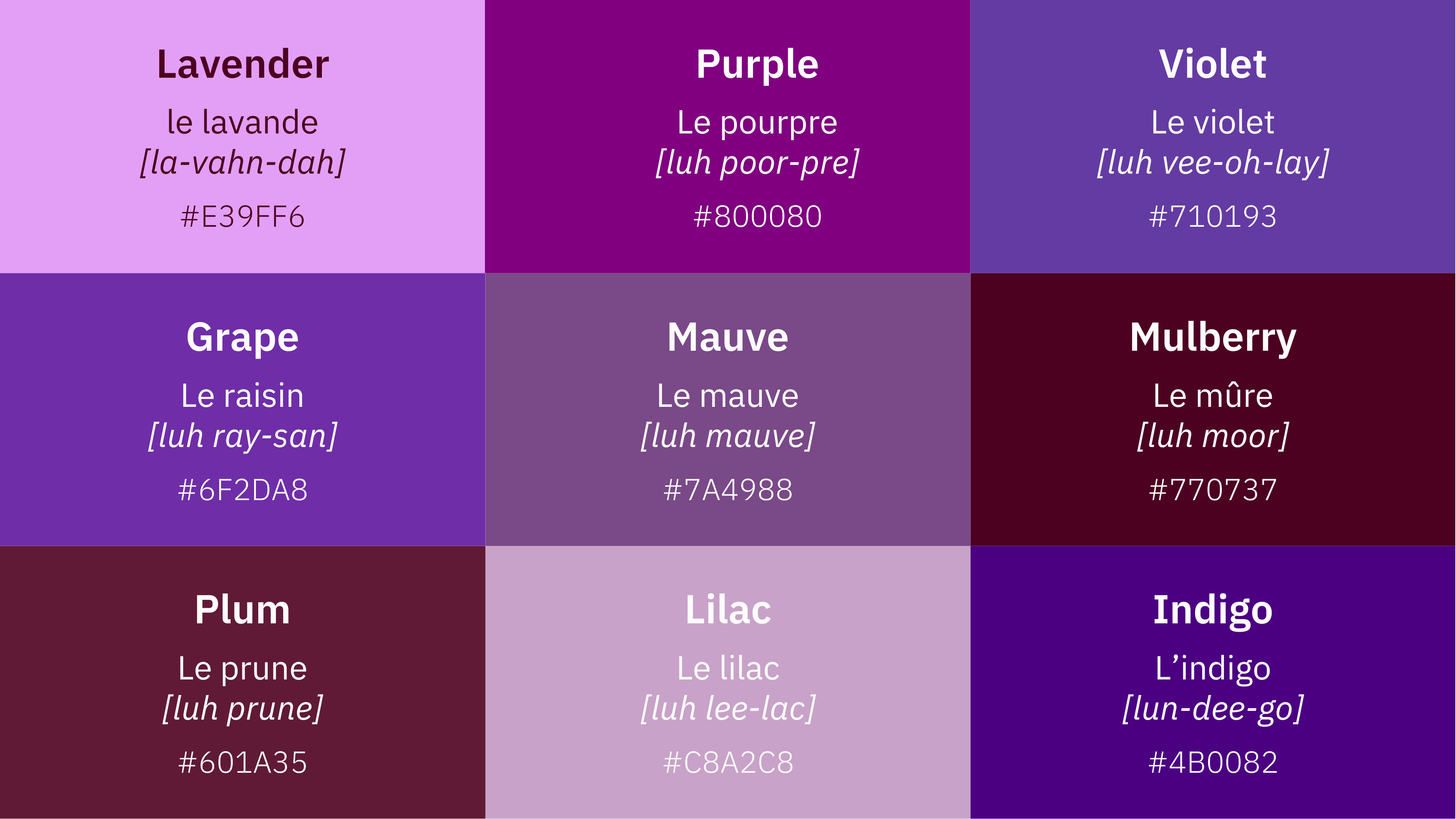
Violet in French


Abbildung der verschiedenen Töne der Farbe lila

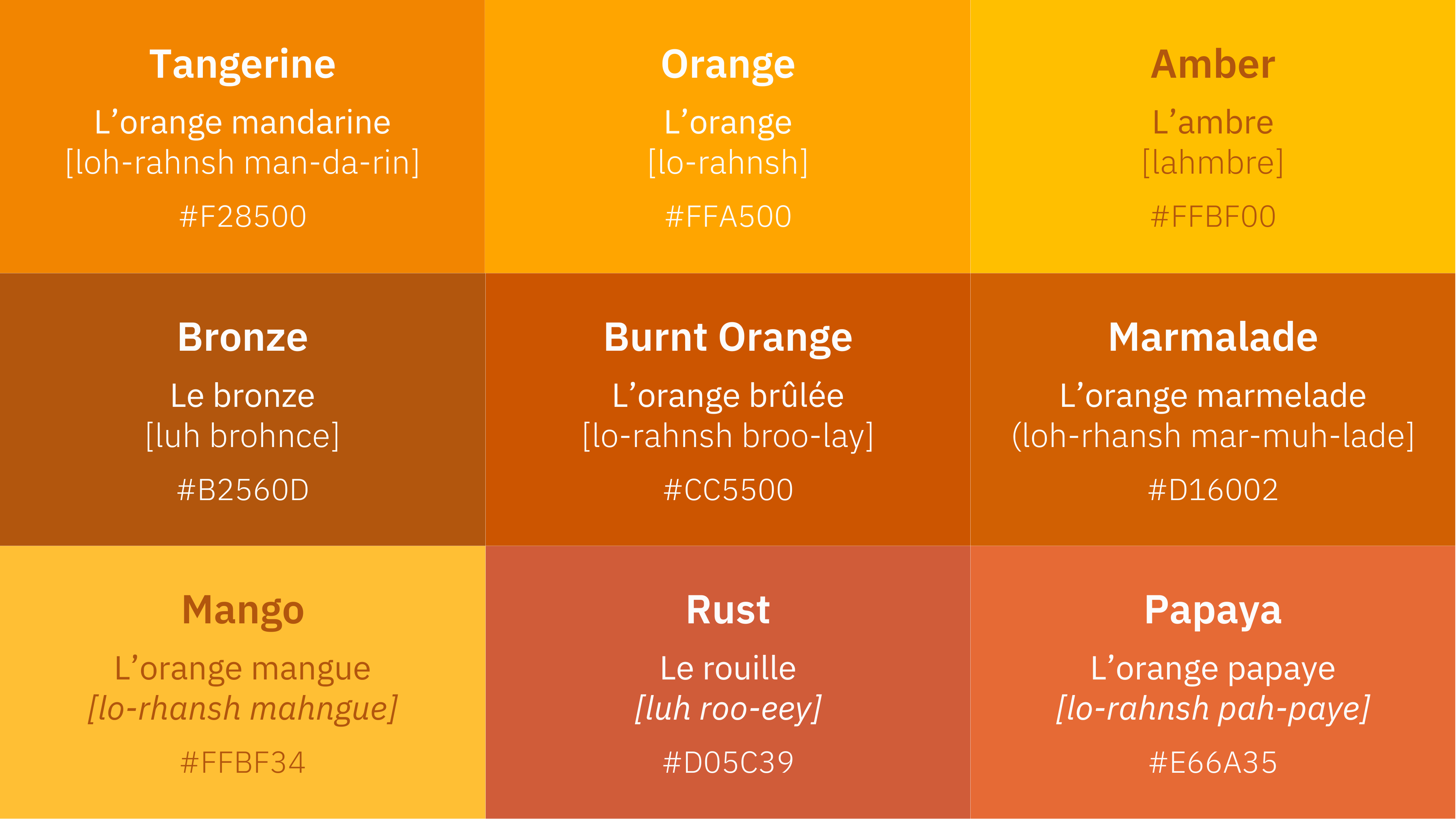
Orange in French


Übersicht der verschiedenen Töne der Farbe Orange

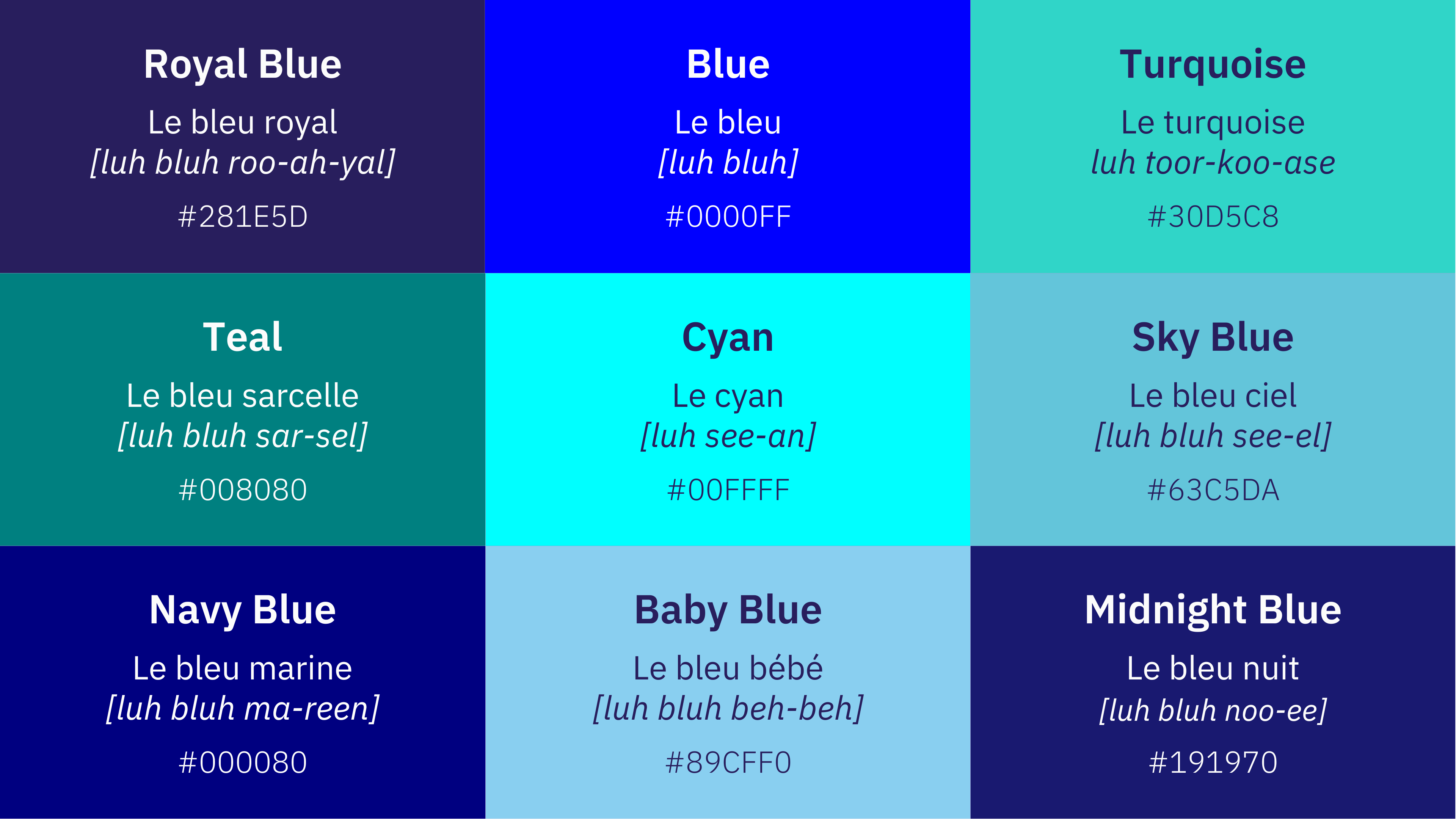
Blue in French


Überblick der verschiedenen Töne der Farbe blau

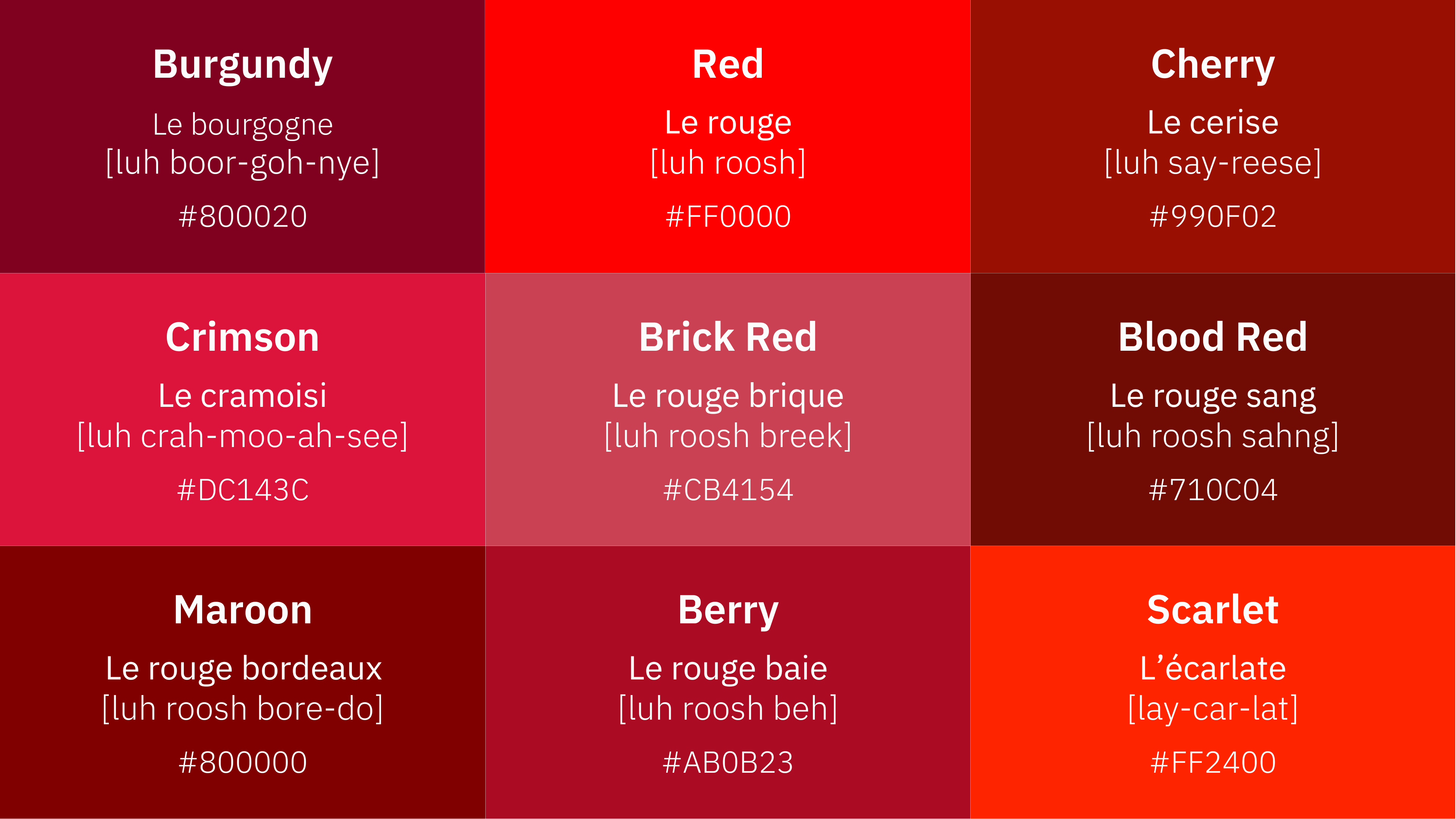
Red in French


Übersicht der verschiedenen Töne der Farbe Rot

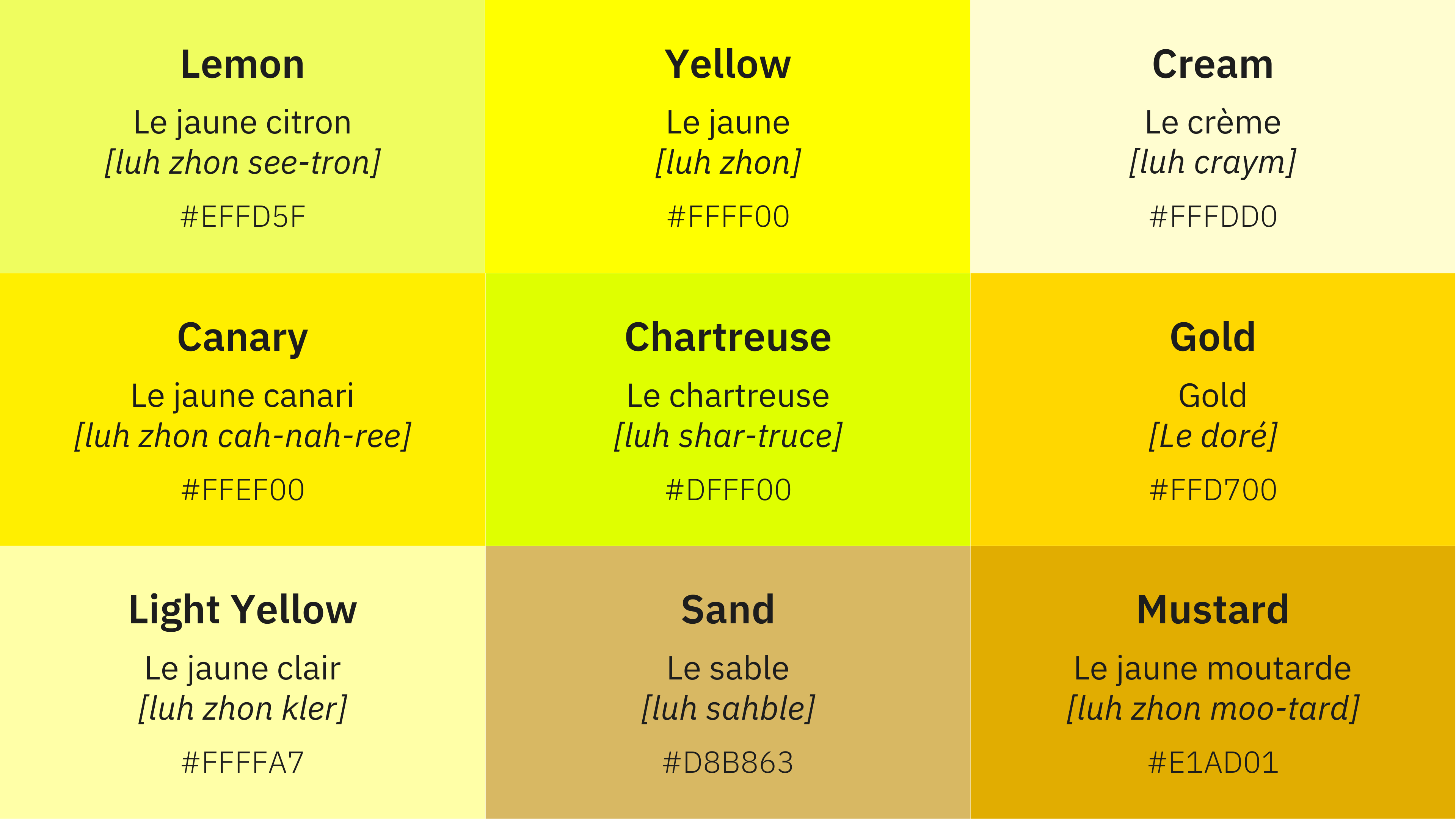
Yellow in French


Übersicht der verschiedenen Töne der Farbe Gelb

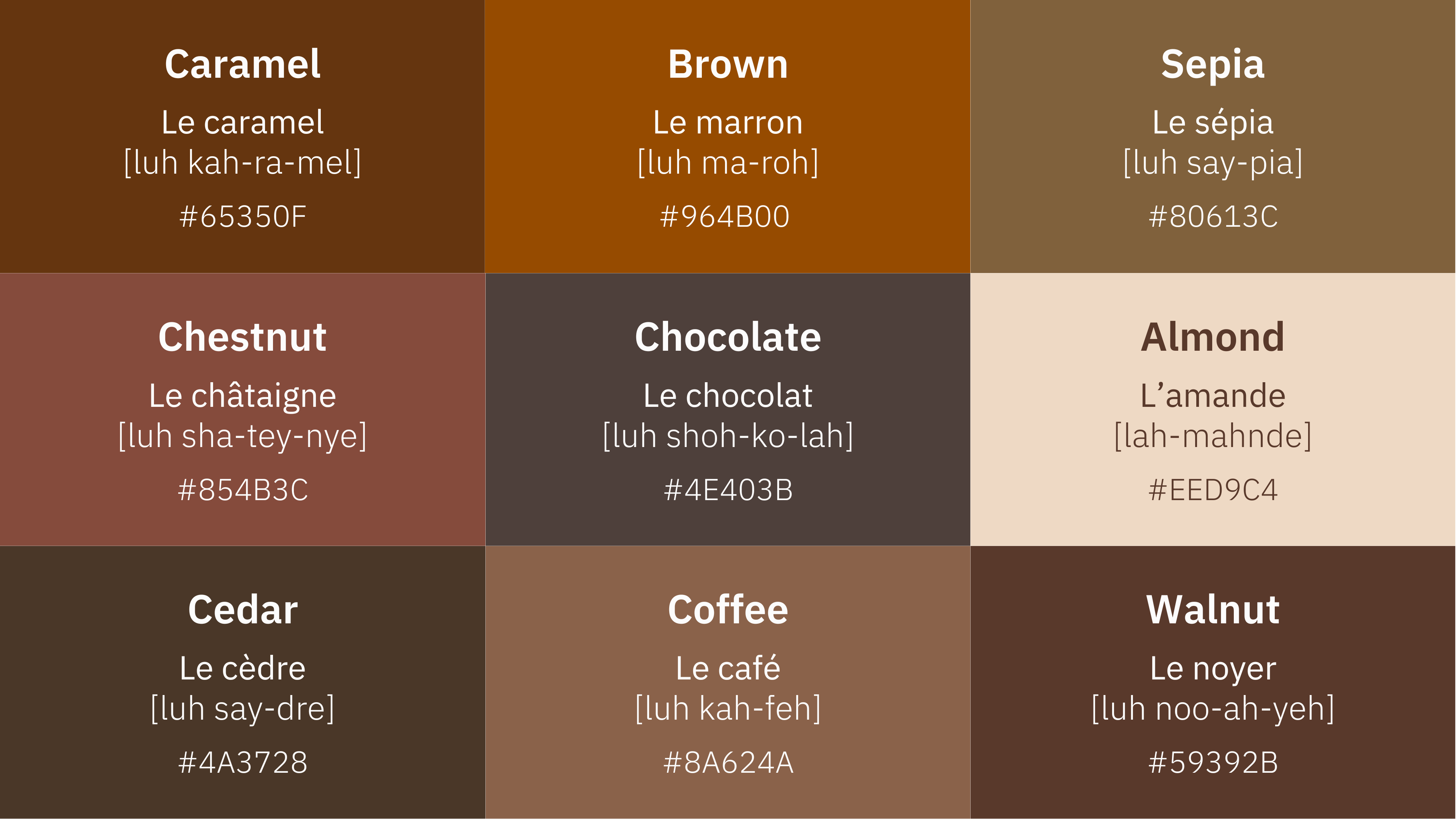
Brown in French


Übersicht der verschiedenen Töne der Farbe Braun

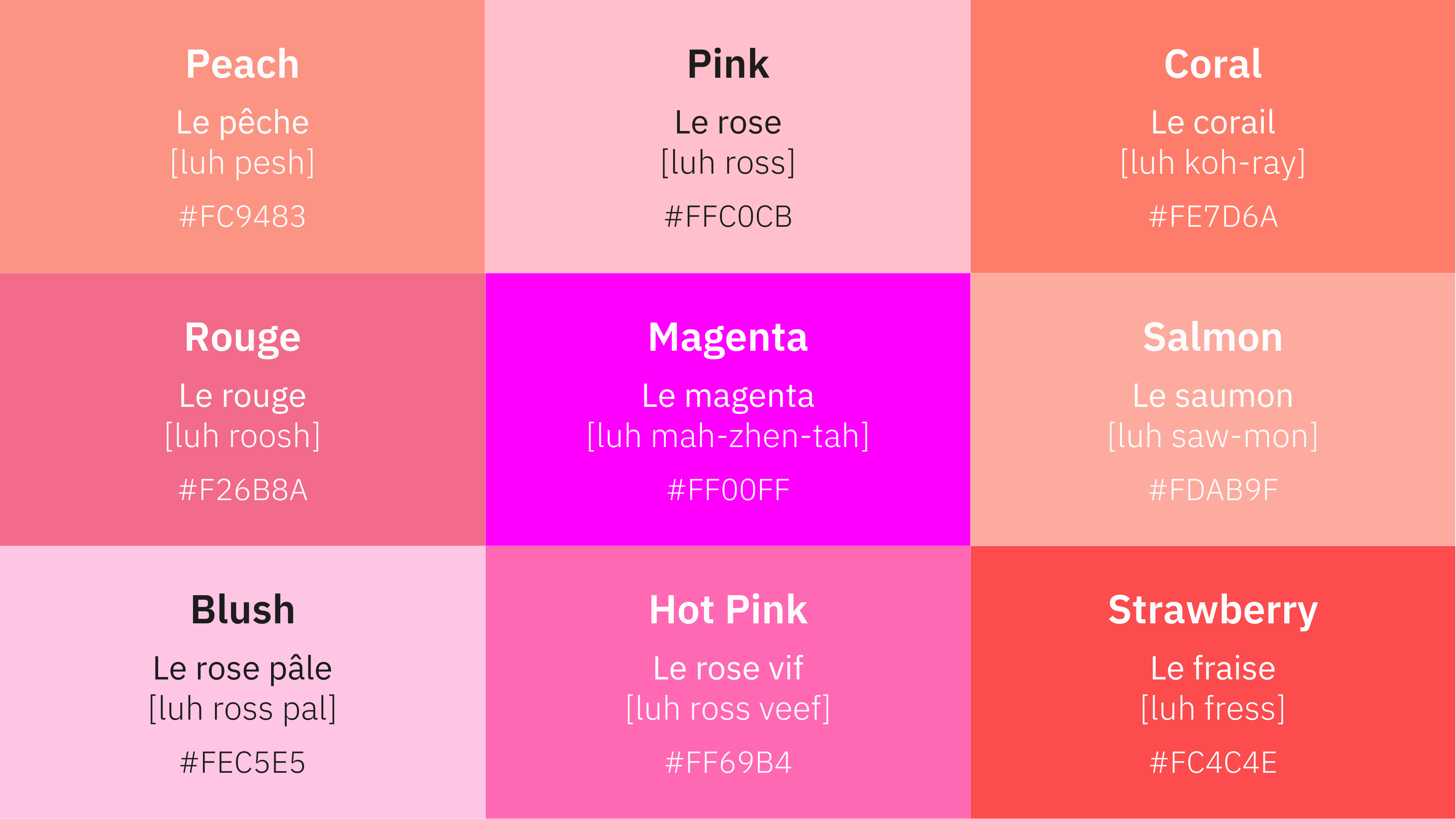
Pink in French


Überblick der verschiedenen Töne der Farbe Pink.

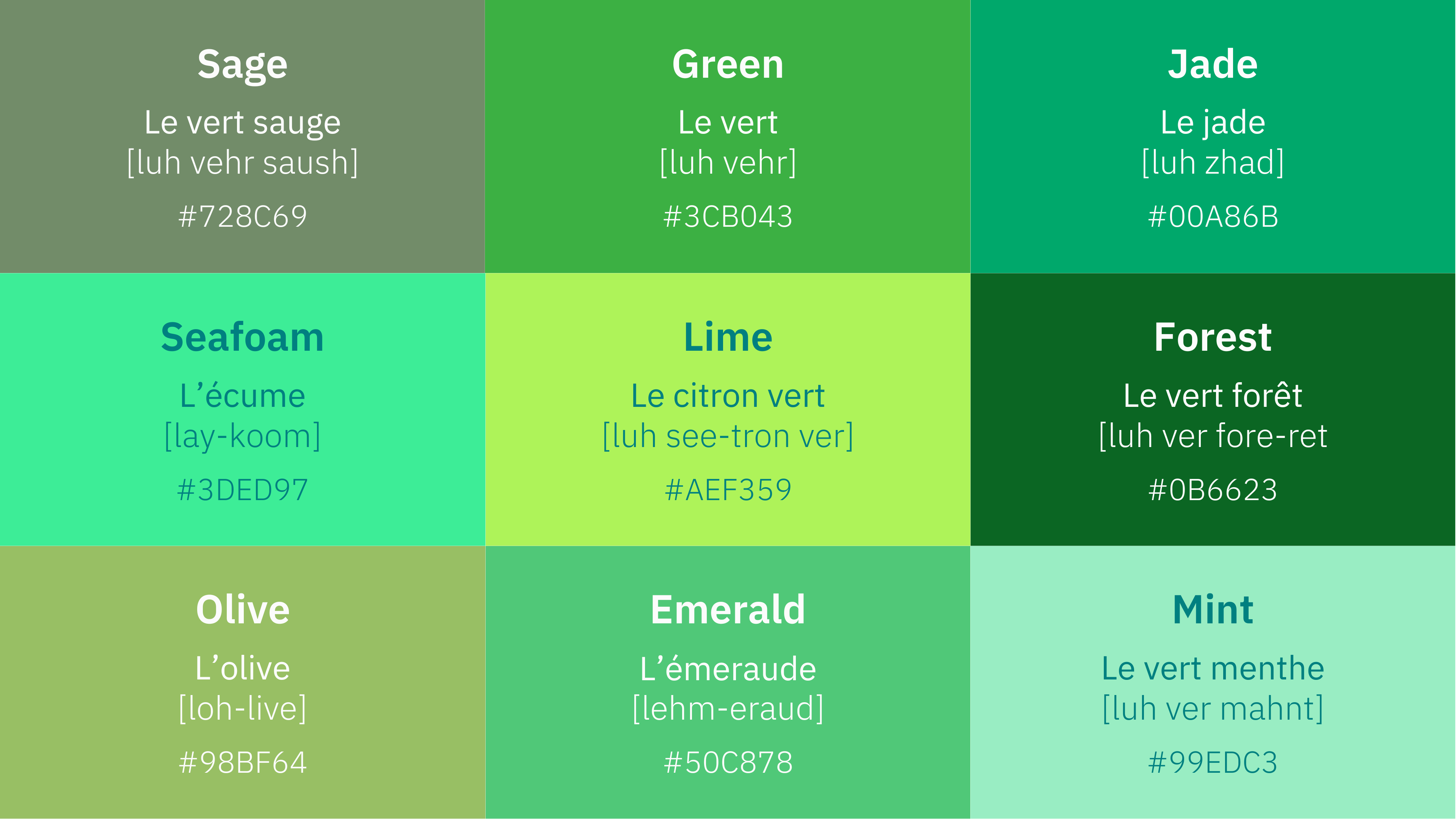
Green in French


Übersicht der verschiedenen Töne der Farbe Grün

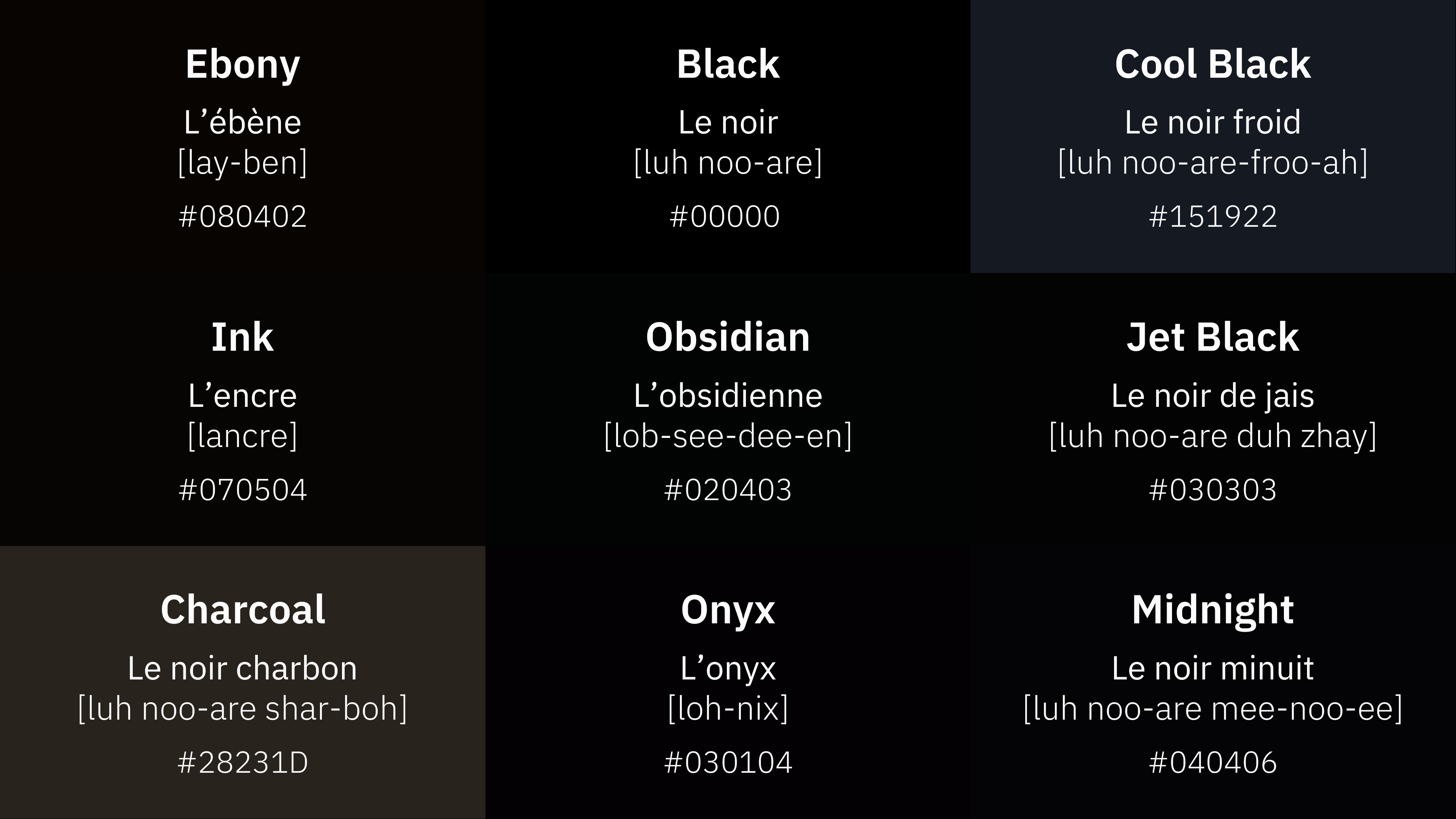
Black in French


Übersicht der verschiedenen Töne der Farbe Schwarz

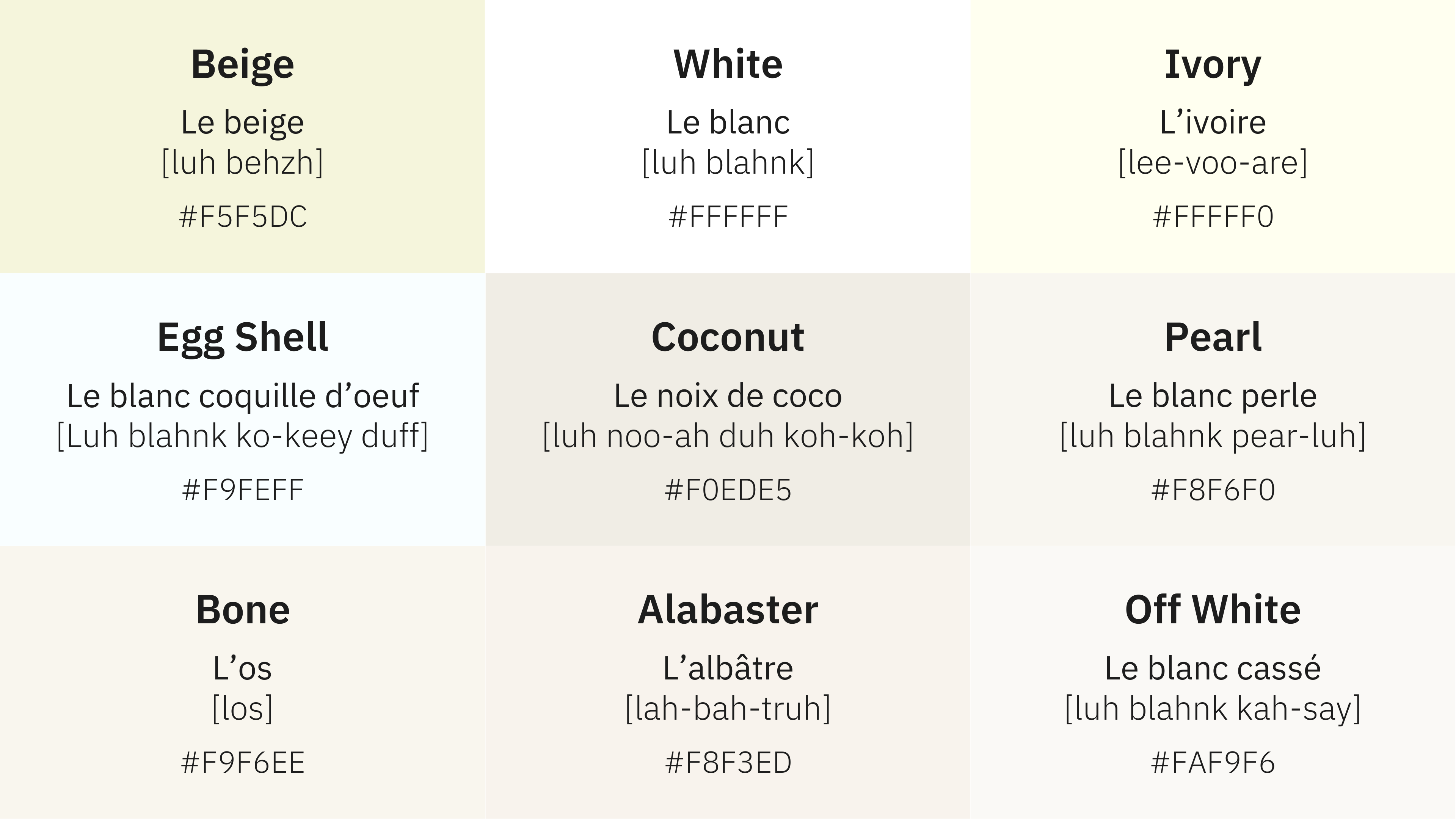
White in French


Übersicht der verschiedenen Töne der Farbe Weiß

Useful facts about colors in French

What do I need to consider in terms of gender and number?

In French, color adjectives must be adapted to the noun they describe - both in gender (masculine or feminine) and in number (singular or plural). For example: “une robe rouge” (a red dress) vs. “des robes rouges” (red dresses). Some color names (such as orange or marron) remain unchanged regardless of whether they are masculine, feminine, singular or plural.

Good to know: Colors themselves are adjectives and have no fixed gender. They always adapt to the noun they describe. Example: “un pull bleu” (a blue sweater) vs. “une chemise bleue” (a blue blouse).

French is colorful

Learning colors in French is much more than just memorizing words - it opens up access to a living language and its cultural diversity. Colors are omnipresent: they enrich descriptions, shape idioms and reflect the French way of life.

So whether in everyday conversations or simply for the fun of discovering new expressions, the color vocabulary is a colorful and rewarding step on the way to mastering the language. With a little practice and curiosity, you'll soon realize how colorful and fascinating the French language is. You can test your knowledge directly in a French course.

Related Articles

26 February 2024

26 February 2024

A useful beginner’s guide to the months of the year in French
29 September 2023

29 September 2023

A definitive beginner’s guide to the days of the week in French
4 February 2022

4 February 2022

23 useful ways to say hello in French, no matter the situation